Python Programming Course – Learn the Most In-Demand Language

The Python Programming course is designed to build strong programming fundamentals and practical skills used in Web Development, Data Analysis, Automation, and Artificial Intelligence.

Enroll Now

Python Programming Course

Beginner Friendly

No Programming Background Needed

2–3 Months

Course Duration

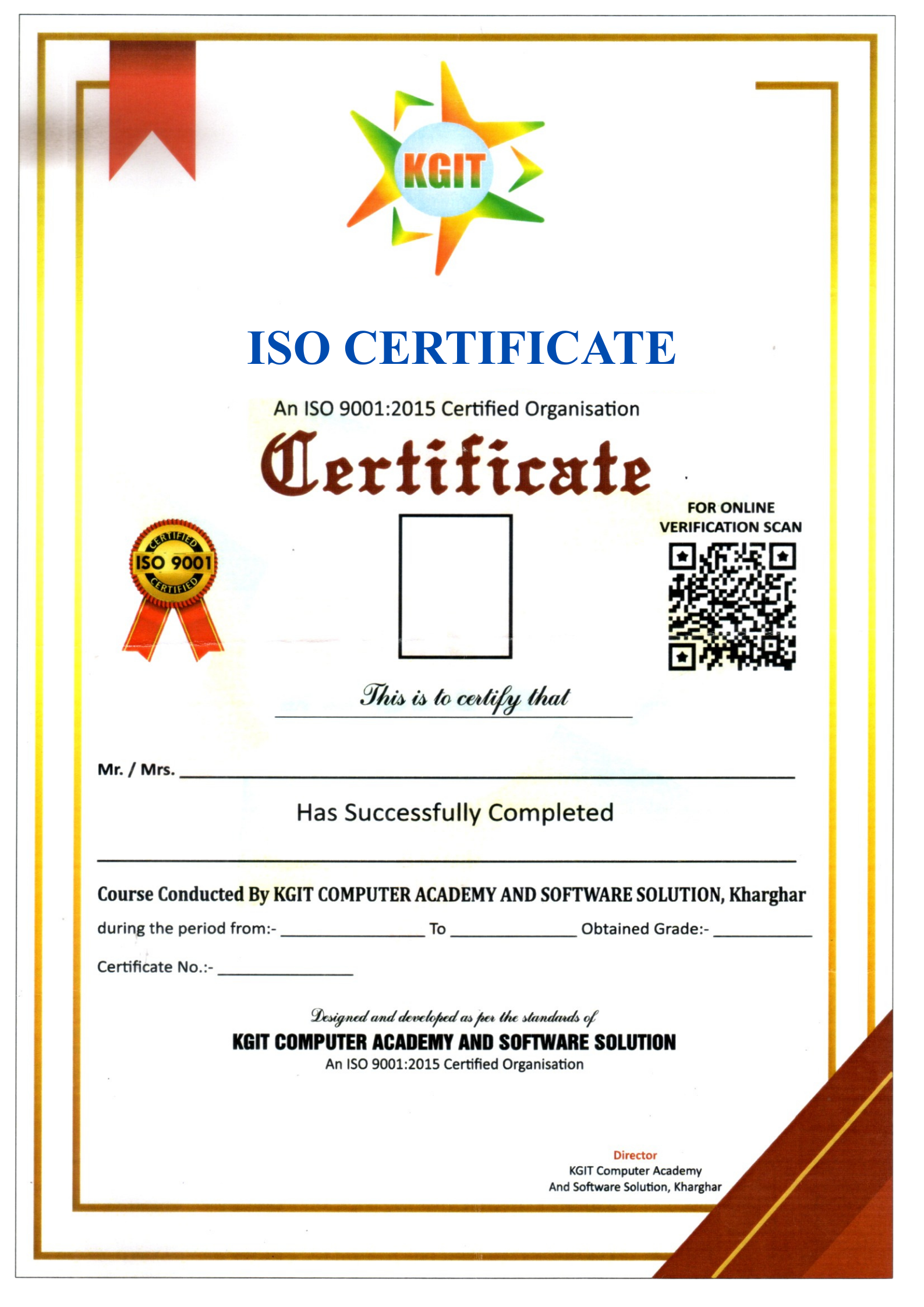
Certificate

KGIT Certified

Practical Training

Hands-on Coding & Projects

Career Oriented

Industry Relevant Skills

About Python Programming Course

The Python Programming course focuses on developing problem-solving skills and logical thinking using a simple, powerful, and versatile language.

Students learn Python syntax, control statements, functions, lists, tuples, dictionaries, file handling, modules, object-oriented programming, and database connectivity.

At KGIT Computer, training is completely practical with real-time examples, mini projects, and hands-on assignments.

Full Stack Development Using Python Curriculum

Python Introduction
Memory Management
Installation & Basics of Python
Data Types
Operators
Flow Control Statements
Python Strings
List
Tuple
Set
Dictionaries
Python Functions & Advanced Functions
Modules, Packages & Library
Date Time Module
File Handling
Exception Handling
Python Loggers & JSON
Regular Expression
Multi-Threading
Python Collections Module
Object Oriented Programming
Inheritance
  • What is Python
  • Python History
  • Versions of Python
  • Features & Limitations of Python
  • Scripting Language vs Programming Language
  • Applications of Python
  • Python 2 vs Python 3
  • Flavours of Python
  • Python vs Java
  • How Python Works (Bytecode & PVM)
  • Compile Time vs Run Time
  • Future Scope & Career Opportunities
  • What is Memory Management
  • Memory at Hardware, OS & Application Level
  • Static & Dynamic Memory Allocation
  • Stack & Heap Memory
  • Garbage Collection
  • Reference Counting
  • Manual Garbage Collection
  • Space Complexity
  • Python Installation on Windows
  • Check Python Version
  • IDLE & Editors
  • Running Python Programs
  • Using Visual Studio Code
  • Identifiers & Naming Rules
  • Constants & Variables
  • Keywords & Comments
  • Indentation & User Input
  • Text Data Type
  • Numeric Types
  • Sequence Types
  • Mapping Types
  • Set Types
  • Boolean & None Type
  • Type Casting
  • Operators Overview
  • Arithmetic Operators
  • Assignment Operators
  • Comparison Operators
  • Logical Operators
  • Identity Operators
  • Membership Operators
  • Bitwise Operators
  • Operator Precedence
  • Ternary Operator
  • Decision Control Statements
  • if, if-else, elif
  • Nested Conditions
  • Multiple Conditions
  • Break, Continue & Pass
  • For Loop
  • While Loop
  • Pattern Programs
  • String Indexing & Slicing
  • Immutable Nature
  • String Operations
  • Escape Characters
  • Substring & Length
  • Replace & Split
  • Case Conversion
  • String Methods
  • List Creation
  • Accessing Elements
  • List Mutability
  • append(), insert(), extend()
  • remove(), ordering
  • Nested Lists
  • List Comprehension
  • Creating Tuple
  • Accessing Tuple
  • Tuple Methods
  • Tuple Comprehension
  • Unpacking Tuple
  • Tuple vs List
  • Creating Sets
  • Modifying & Removing Elements
  • Set Operations
  • Built-in Functions
  • Set Comprehension
  • Frozen Sets
  • Dictionary Creation
  • Access & Update Dictionary
  • Delete Elements
  • Dictionary Methods
  • Membership & Iteration
  • Dictionary Comprehension
  • Nested Dictionary
  • Built-in & User Defined Functions
  • Arguments & Return Types
  • Variable Length Arguments
  • Recursion
  • Lambda Functions
  • map(), filter(), reduce()
  • Decorators
  • Generators & Yield
  • What is Module
  • Import Methods
  • Packages & __init__.py
  • Math & Random Module
  • PIL, MoviePy, pyscreenshot
  • Date Class
  • Time Class
  • DateTime Class
  • TimeDelta Class
  • File Open & Close
  • Read & Write Operations
  • Seek & Tell
  • OS Module
  • Directories
  • CSV Files
  • Zip & Unzip
  • Types of Errors
  • try, except, finally
  • Multiple Exceptions
  • Custom Exceptions
  • Assert Keyword
  • Python Logging Basics
  • Log Levels
  • basicConfig()
  • Handlers & Formatting
  • JSON Handling
  • Serialization & Deserialization
  • Pickling & Unpickling
  • Character Classes
  • Quantifiers
  • re Module Functions
  • Web Scraping using Regex
  • Multithreading Basics
  • Thread vs Process
  • Thread Creation
  • Synchronization
  • Deadlock & Race Condition
  • Counters
  • OrderedDict
  • defaultdict
  • ChainMap
  • Deque
  • UserDict, UserList, UserString
  • Class & Object
  • Constructor & Destructor
  • Instance & Static Variables
  • Inner Classes
  • Garbage Collection
  • Single Inheritance
  • Multiple Inheritance
  • Multilevel Inheritance
  • Hierarchical Inheritance
  • Hybrid Inheritance
  • MRO (Method Resolution Order)
01
Basics Python Introduction
+
  • What is Python
  • Python History & Versions
  • Features & Applications
  • Python vs Java
  • How Python Works (PVM)
  • Career Scope
02
Core Memory Management
+
  • Static & Dynamic Memory
  • Stack & Heap
  • Garbage Collection
  • Reference Counting
03
Setup Installation & Basics
+
  • Python Installation
  • IDLE & VS Code
  • Variables & Keywords
  • User Input & Indentation
04
Core Data Types
+
  • Text & Numeric Types
  • Sequence & Mapping
  • Type Casting
  • Boolean & None
05
Core Operators
+
  • Arithmetic & Logical
  • Comparison & Assignment
  • Bitwise & Ternary
06
Logic Flow Control
+
  • if, else, elif
  • Loops (for, while)
  • Break & Continue
07
Core Strings
+
  • Indexing & Slicing
  • String Methods
  • Replace & Split
08
DS List, Tuple, Set, Dictionary
+
  • List & Tuple
  • Set Operations
  • Dictionaries
  • Comprehensions
09
Functions Functions & Advanced
+
  • Lambda & Recursion
  • map(), filter(), reduce()
  • Decorators & Generators
10
Advanced Modules & File Handling
+
  • Modules & Packages
  • DateTime
  • File Operations
  • CSV & OS Module
11
Advanced Exception, Logging & Regex
+
  • Exception Handling
  • Logging & JSON
  • Regular Expressions
12
Pro Threading & Collections
+
  • Multithreading
  • Synchronization
  • Collections Module
13
OOP OOP & Inheritance
+
  • Class & Object
  • Constructor
  • Inheritance Types
  • MRO

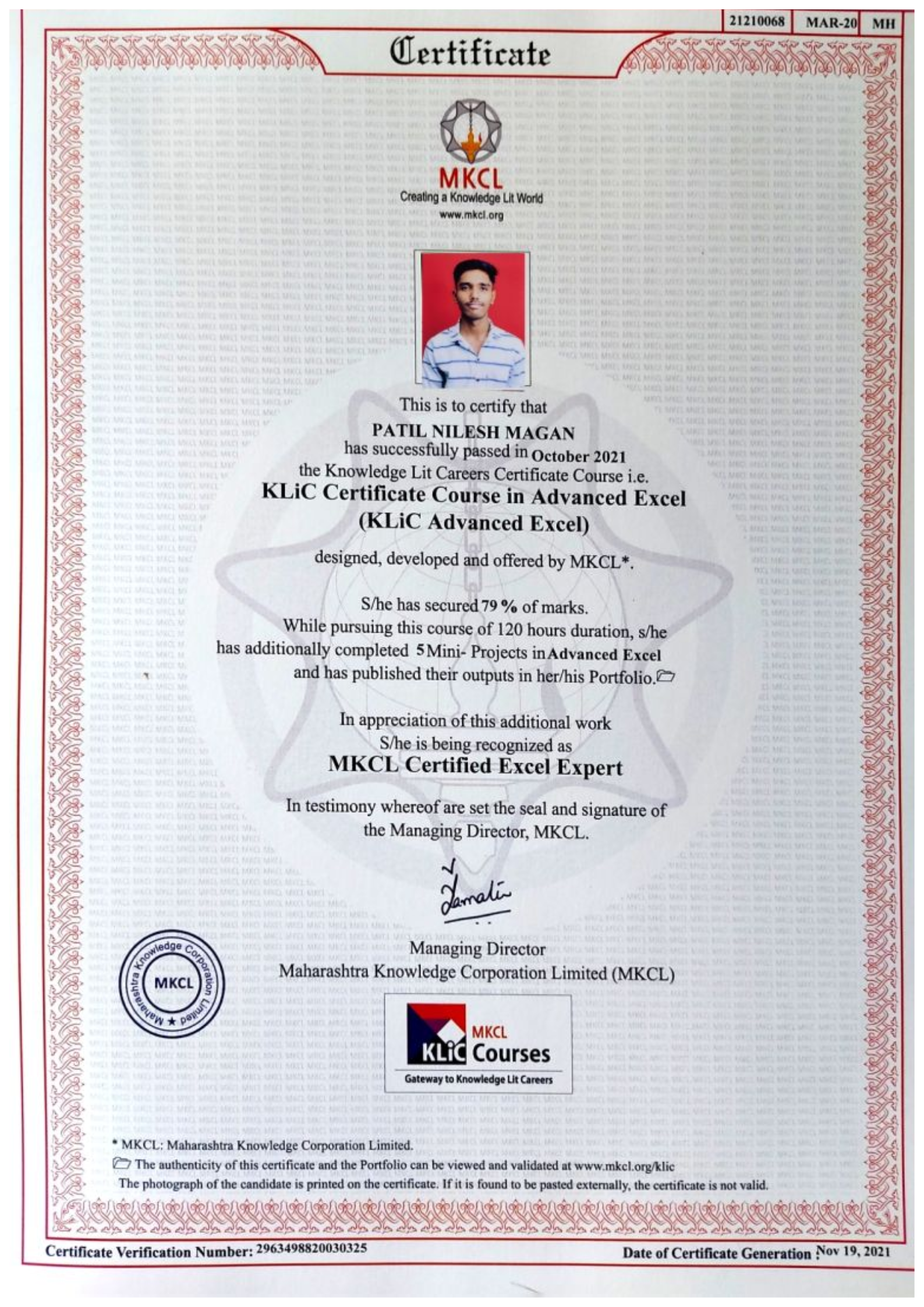
Certification For This Course

Receive a C Programming Certificate after successful course completion.

Register Now
Get in Touch

Ready to start your learning journey? Contact us today!

Visit Our Institutes

📍 Our Locations

KGIT Computer Academy & Solutions
B8/01, Gharkul,
Sector-15, Kharghar,
Behind D-Mart,
Navi Mumbai – 410210

📞 Phone

+91 8454085780

⏰ Working Hours

8:00 AM – 9:00 PM

Monday – Saturday

Send us a Message